




|
Quantity
|
Total
|
||
|
|
|||
|
|
|||
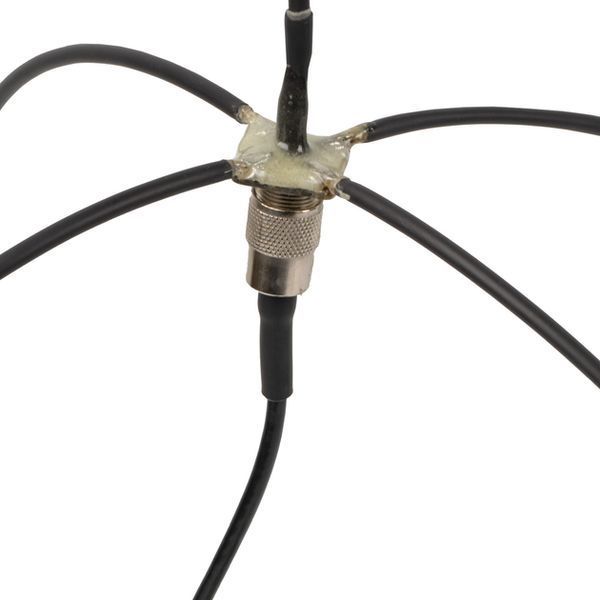
The dual-band external “SPIDER” antenna is designed for portable and mobile radios operating in VHF/UHF bands. An omnidirectional radiation pattern and vertical polarization provide uniform coverage around the installation point. Placing the antenna outside and elevating it above obstacles reduces signal loss caused by ground, concrete, or terrain shielding, directly improving link stability. Supplied with a 10 m coaxial cable and PL-259 connectors for quick connection.
The structure is field-ready: flexible radiating elements, compact when folded, and suitable for suspension at various heights (mast, tree, building, pole). It is a practical solution for temporary or semi-permanent communication points with improved radio horizon.
🫡 We are a veteran team
We assess external antennas by real coverage gain, edge-of-coverage stability, and performance in difficult environments. Moving the antenna out of shelter and elevating it above obstacles provides a noticeable advantage compared to handheld-only operation.
⚙️ TECHNICAL SPECIFICATIONS
| Parameter | Value |
|---|---|
| Product type | External dual-band “SPIDER” antenna |
| Bands | VHF / UHF |
| Polarization | Vertical |
| Pattern | Omnidirectional |
| Cable length | 10 m |
| Connectors | PL-259 |
| Compatibility | Portable and mobile Motorola radios |
| Placement | Suspension/mast/pole/building |
| Construction | Flexible elements, foldable |
| Purpose | Improved stability and communication range |
💬 Comment
An external antenna elevates the radiating point and separates it from shielding structures, improving the radio horizon and reducing attenuation. In practice, this yields more stable links in uneven terrain, forests, and built-up areas. Elevating the antenna a few meters above obstacles can significantly extend reliable coverage; actual gains depend on terrain, mounting height, radio power, and antennas at both ends of the link.
The flexible design enables easy transport and rapid deployment. Effective for establishing communication points in shelters, observation posts, or as a temporary base for a team.
🎯 Suitable for
Military units and communication teams operating from shelters or in complex terrain requiring stable local coverage. Coordination and command posts where edge-of-coverage reliability is critical.
Security, rescue, and emergency services deploying temporary communication points in field conditions. Engineering, logistics, and mobile teams needing quick local coverage enhancement without fixed infrastructure.