
|
Quantity
|
Total
|
||
|
|
|||
|
|
|||
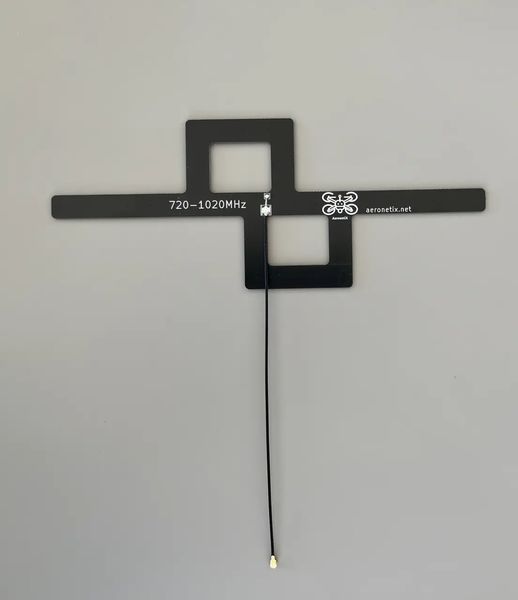
Wideband dipole receiving antenna for FPV drone control 700–1060 MHz Aeronetix, 10 cm cable, IPEX1
Wideband dipole receiving antenna for FPV drone control 700–1060 MHz Aeronetix, 10 cm cable, IPEX1 is designed for stable reception of control signals within the 720–1060 MHz frequency range. Linear polarization and operation in the mid-frequency band provide a balanced combination of communication range and resistance to interference.
The compact and lightweight design allows easy integration into receiver modules without adding unnecessary load to the platform. The flexible cable and IPEX1 connector ensure convenient installation and quick connection in various system configurations.
We are a team of veterans
We work with control systems in real-world conditions where signal stability directly determines platform control. We understand the importance of proper antenna selection for specific frequency ranges and operating environments.
We choose solutions based on practical use, distance requirements, and environmental conditions. Our approach focuses on delivering reliable and stable performance.
Technical specifications
| Parameter | Value |
|---|---|
| Type | Dipole receiving antenna |
| Frequency range | 720–1060 MHz |
| Gain | 2 dBi |
| Polarization | Linear |
| Dimensions | 185 × 73 × 1.5 mm |
| Weight | 12 g |
| Connector | IPEX1 |
| Cable length | 80 mm |
| Application | Control signal reception |
| Manufacturer | Aeronetix |
Comment / comments
The 2 dBi gain provides uniform signal reception without strong directivity, making it suitable for mobile platforms. The antenna does not require precise alignment and performs consistently in different orientations.
The 700–1000 MHz range offers better signal penetration through obstacles compared to higher frequencies. This makes the antenna effective in environments with terrain variations and interference.
Who it is suitable for
Military
Suitable for control systems where stable signal reception and interference resistance are critical. Provides reliable reception even in complex terrain. Allows maintaining control over medium distances. Used in both mobile and stationary systems. Suitable for field operations.
FPV operators and technical units
Suitable for receiver modules operating in the 700–1000 MHz range. Provides stable signal without complex tuning. Used in various system configurations. Offers flexibility in antenna placement. Suitable for everyday operational use.
Engineers and system developers
Used in testing and development of control systems. Allows operation across a wide frequency range. Suitable for laboratory and field testing. Ensures stable and repeatable results. Used in prototyping.
Control and data transmission systems
Suitable for receiving modules in different technical solutions. Provides stable signal when properly matched. Used in mobile systems. Enables operation in interference-heavy environments. Suitable for specialized configurations.
Enthusiasts and experimenters
Suitable for building custom control systems. Enables work within the 700–1000 MHz range. Provides stable results when properly configured. Used for testing and tuning. Offers flexibility in system design.