
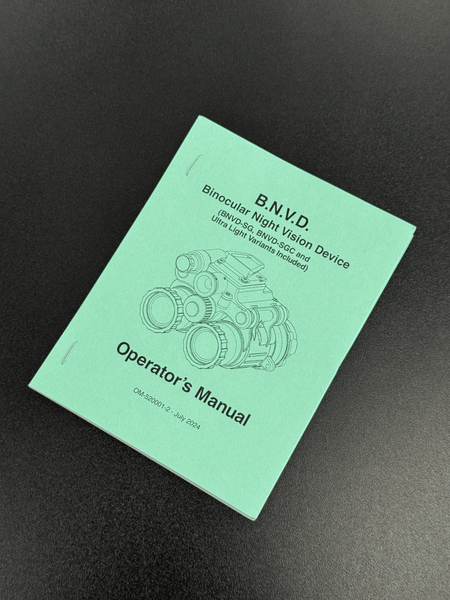
The BNVD SG Manual is a comprehensive printed operation guide for the binocular night vision device with manual image brightness gain control. This document details all equipment operation algorithms from basic interpupillary distance adjustment to fine diopter calibration and Single Gain system management. Thanks to the structured information presentation the user gets quick access to sections covering technical maintenance battery replacement and the safe use of infrared illumination in total darkness.
The printed edition is made on thick waterproof paper that retains its properties even during intensive use in severe weather conditions or high humidity. The compact format allows conveniently placing the reference book in a gear pocket providing prompt technical support directly during mission execution without the need to search for electronic document versions.
Technical Specifications
| Parameter | Value |
| Publication type | User manual |
| Language | Ukrainian |
| Compatibility | BNVD SG (Single Gain) series binoculars |
| Format | A5 pocket size |
| Page material | Waterproof thick paper |
| Cover | Soft with lamination |
| Content | Setup gain control maintenance troubleshooting |
Commentary / Comments
The main advantage of this manual lies in the precise localization of technical terms related to the operation of binocular systems with manual brightness adjustment. Many operators ruin expensive devices precisely because they do not know the limits of the safe use of the Single Gain function in changing light conditions. The document explains step by step how to correctly set the gain to obtain a clear picture and avoid overloading the intensifier tubes during sudden light flashes.
The compact dimensions ensure that necessary information is always next to the operator. The presence of detailed diagrams and typical troubleshooting algorithms helps resolve minor technical issues directly at the deployment site avoiding the need to send a fully functional device for repair.
Target Audience / Suitable For
Military personnel of infantry and reconnaissance units receive a reliable knowledge source for the correct operation of binocular optics in combat environments. The manual deeply reveals all the nuances of adjusting the interpupillary distance focusing the objective lenses and properly using the manual gain control depending on the external lighting level. A clear understanding of bright flash protection algorithms guarantees the preservation of the expensive device while working near artificial light sources or during sudden situation changes. The compact size allows constantly carrying the document in a gear pocket and instantly finding needed information about battery replacement or operating the infrared illuminator.
Instructors of training centers apply this material as a basic textbook for teaching cadets the fundamentals of working with modern night vision systems. The structured text with detailed step by step algorithms significantly facilitates the process of explaining complex optical principles to soldiers without prior experience. The presence of comprehensive sections on regular maintenance and typical malfunctions allows teaching personnel to independently care for the entrusted gear. Localized professional terminology removes the language barrier accelerating material assimilation by training groups and reducing the number of damaged devices in the future.
Technical gear maintenance specialists find exact specifications in the reference book regarding the compatibility of various power cells lens cleaning rules and basic service maintenance. The document helps correctly integrate devices onto different helmet types avoiding damage to brackets locking mechanisms or contact groups. Understanding the manufacturer recommendations for long term storage and equipment preservation allows organizing proper optics inventory in warehouses. This directly reduces the property write off rate caused by temperature condition violations or a negligent attitude towards sensitive electronic components.