
|
Quantity
|
Total
|
||
|
|
|||
|
|
|||
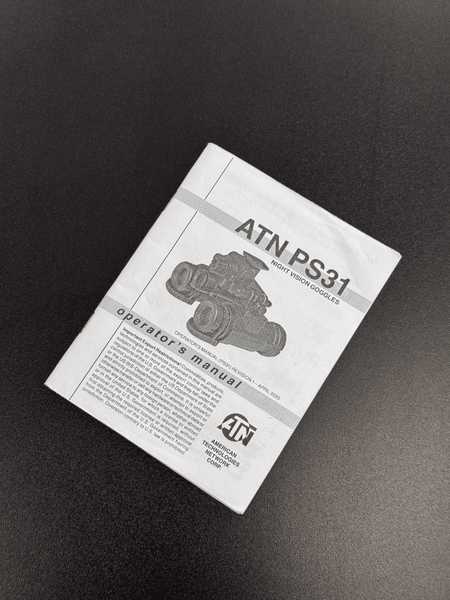
The technical document ATN PS31 Manual serves as an exhaustive user guide developed to ensure correct setup, effective operation, and proper technical maintenance of the ATN PS31 night vision binocular system. The document provides comprehensive information regarding the device's functional capabilities, structural features, step-by-step commissioning procedures, and thorough guidelines for diagnosing and resolving common system faults.
The manual details operational algorithms for preparing the binocular for field deployment, mounting procedures for various helmet shroud types, individual interpupillary distance adjustment, diopter correction, objective lens focusing, and a structured protocol for optical surface maintenance. The document explains the operational specifics of image intensifier tubes, integrated infrared illuminator functionality, safe battery replacement procedures, and safety protocols for operating in zero-visibility environments. Possessing structured technical data minimizes the risk of equipment damage due to operator error and guarantees maximum service life.
Technical Specifications
| Parameter | Value |
| Document Title | ATN PS31 Manual |
| Compatibility | ATN PS31 night vision binocular systems (all modifications) |
| Document Type | User Manual / Technical Data Sheet |
| Language | Ukrainian |
| Format | Printed / digital edition |
| Content | Operation guidelines, calibration, maintenance, troubleshooting |
Commentary / Comments
The primary value delivered by the ATN PS31 Manual lies in equipping operators with precise algorithms for accurate individual adjustment of both optical channels, which is critical for maintaining spatial orientation and eliminating visual fatigue during extended surveillance windows. Comprehensive control layouts allow confident manipulation of system operating modes by touch without visual feedback in complete darkness.
Special emphasis within the manual is placed on protecting image intensifier tubes from damaging high-intensity light exposure, representing the decisive factor in preserving expensive optical components. Step-by-step troubleshooting routines and optical glass cleaning instructions ensure the system maintains constant operational readiness for deployment across all environmental conditions.
Target Audience / Suitable For
Military personnel and special operations operators utilizing night vision binoculars during nocturnal missions receive a step-by-step guide for correct system setup and rapid operational deployment. The document fully details interpupillary distance adjustment and device engagement onto helmet shrouds, securing steady optical alignment during aggressive movement over rugged terrain. Direct instructions on operating the internal IR illuminator facilitate navigation inside enclosed structures without risking position disclosure. Compliance with specified maintenance routines ensures high image clarity under humid or dusty environmental conditions.
Night vision instructors and technical maintenance personnel responsible for storing, maintaining, and issuing optical equipment can utilize this manual to establish a standardized training framework for personnel. The guide simplifies instruction regarding binocular architecture, image intensifier tube mechanics, and safe handling procedures for sensitive optics. Enforcing a unified operational standard significantly reduces hardware failure rates resulting from user errors or improper storage practices. Furthermore, the document expedites routine technical inspections and pre-deployment functional checkouts.
Security personnel and search-and-rescue teams integrating night vision optics for round-the-clock perimeter monitoring or search operations gain practical insights for optimizing battery consumption. The manual outlines corrective procedures for handling sudden ambient temperature shifts to prevent lens fogging and maintain image contrast. Detailed diagnostic troubleshooting charts facilitate rapid field restoration of binocular functionality directly at the mission area.